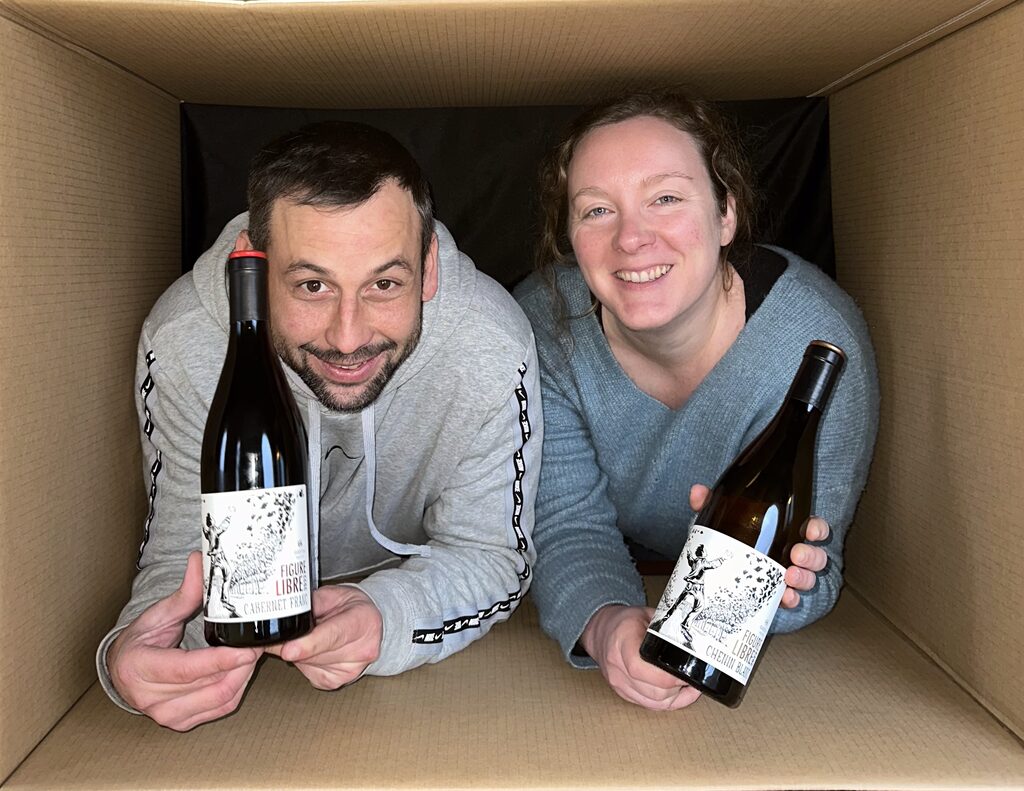
On the occasion of International Women’s Day, we wanted to give a voice to the person who, every day, watches over our wines and guides their evolution.
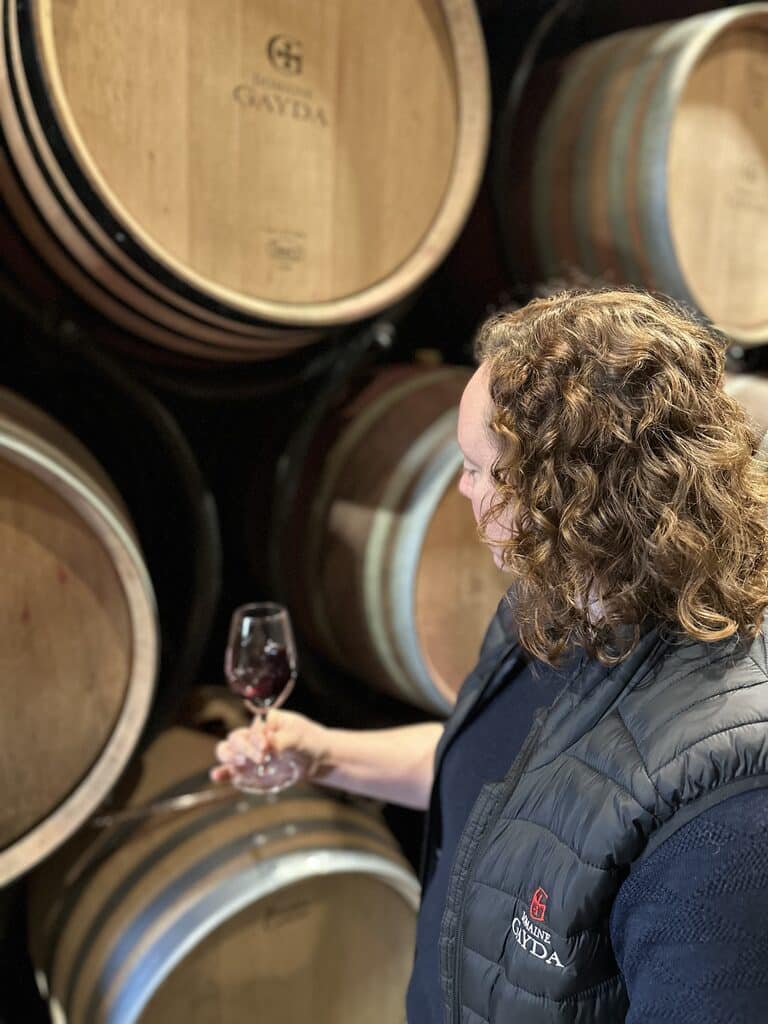
In the cellar, combining technical precision with care, Lucie orchestrates patient work built on close observation, precise actions, and thoughtful decisions that accompany each wine as it develops.
We asked her a few questions about her journey, her daily work, and her vision of wine.
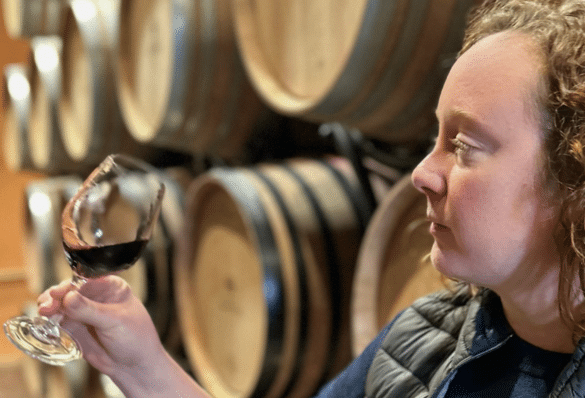
Her journey
Can you tell us about your path to becoming a cellar master?
The idea came quite early, back in high school. The world of wine fascinated me. I grew up in an environment closely connected to the land: my father is a cereal farmer, and I have always loved the world of living things.
I naturally oriented myself towards biology studies, and then towards vines and wine. I started with a technical degree before joining the UIVV (Institut Universitaire de la Vigne et du Vin) in Dijon, where I completed a bachelor’s degree followed by a Master’s in “Vine, Wine and Terroir”. What particularly captivated me was how climate, soil, and human intervention interact to bring a wine to life.
But I still felt something was missing: a deeper understanding of winemaking itself. I therefore continued with the National Diploma of Oenology in Bordeaux.
After my studies, I did several internships in Bordeaux, then embarked on a “tour de France” of wine appellations, exploring different regions and their ways of making wine. It was finally in Alsace that I settled down: I submitted a few applications and was called back to take part in the 2015 vinifications.
I was then offered a position at a domaine in Rouffach, at Domaine Muré. I did a bit of everything: vineyard work, cellar tasks, preparing orders. I learned a great deal alongside the cellar master and gradually followed his path. I stayed there for eight years.
Later, to move closer to my partner from Toulouse, I decided to look for a position further South. I joined Domaine Gayda in January 2023.
Her daily work
What does a typical day in the cellar look like for you?
There really isn’t a “typical” day, and that’s what makes this job so fascinating.
A harvest day is nothing like a bottling day or a day in the cellar. The work follows the rhythm of wine and seasons.
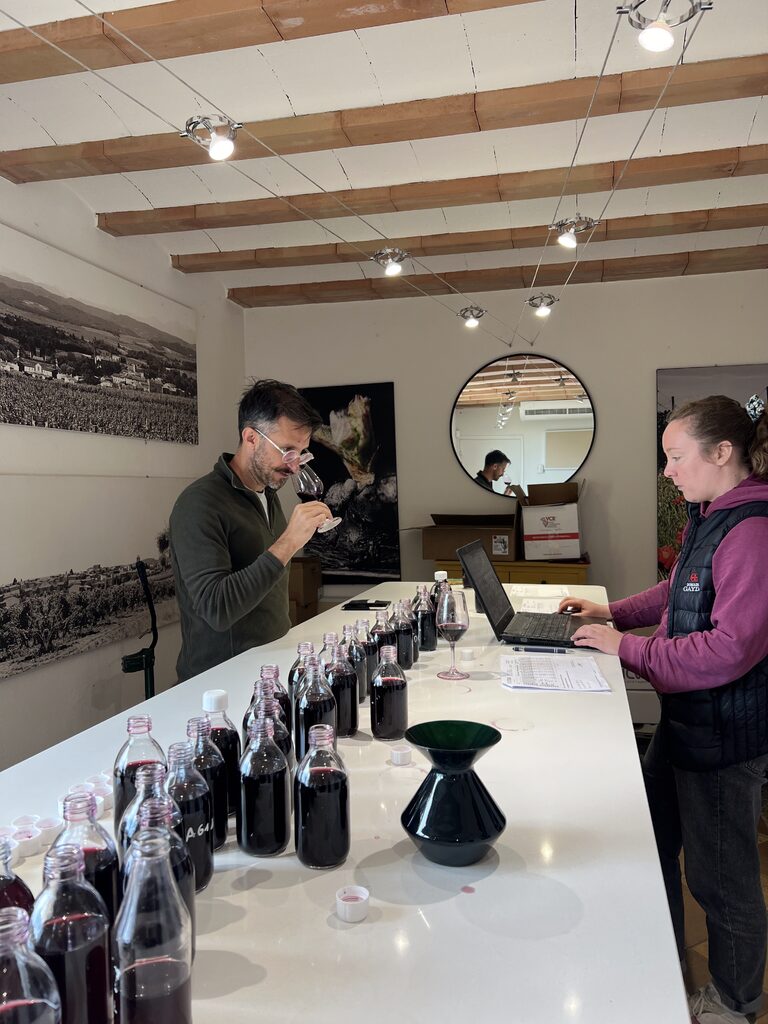
The day starts with a coffee with the team and a quick briefing. After that, it all depends on the needs of the moment: monitoring the wines through tasting, deciding on racking, preparing a bottling, organising supplies, or coordinating work in the cellar.
At the moment, for example, we are focusing a lot on ageing process decisions. We taste the wines to decide whether they should go into stainless steel, wood, or concrete tanks, depending on their structure, maturity, and the expression we want to give them.
What requires the most precision? And what relies most on intuition?
Precision is essential in many aspects of the job: hygiene, organisation, equipment monitoring, and stock management all demand careful attention. The smallest detail can affect the wine.
On the other hand, some decisions rely heavily on intuition. When choosing how to age a wine, there is no strict formula. It’s a question of tasting, experience, and instinct.
What time of year do you prefer?
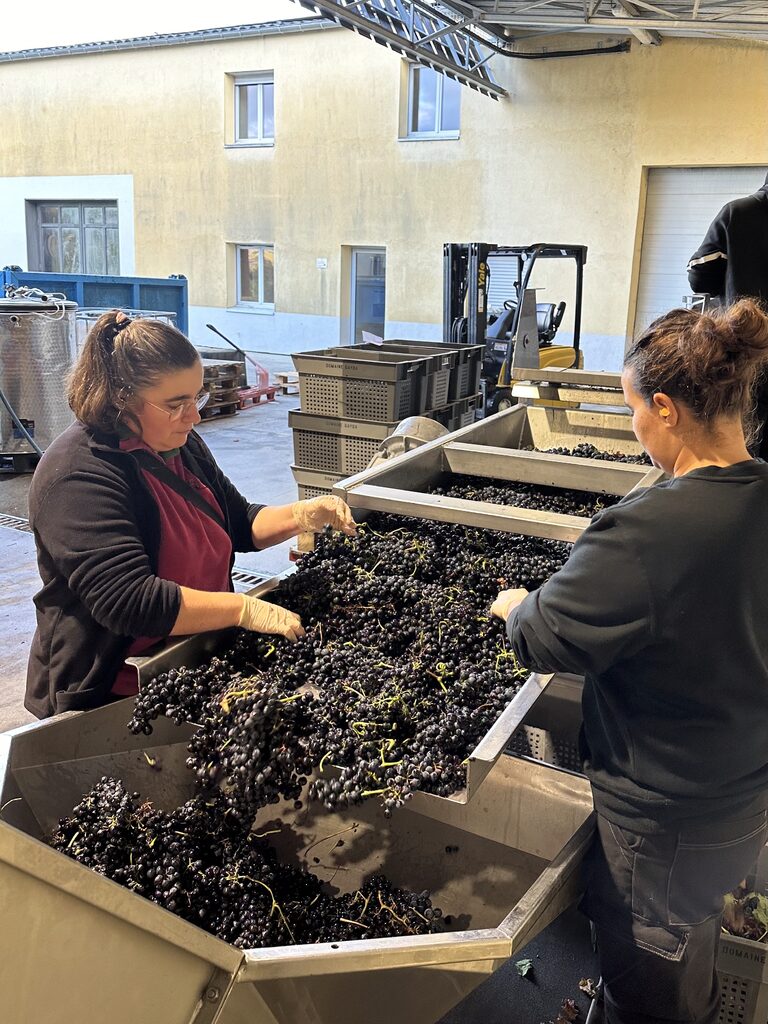
The start of the harvest is particularly special.
The first sunny days, the first grapes arriving in the cellar… there’s a lot of energy in the air. It’s the culmination of the vineyard team’s work and, at the same time, the beginning of the cellar work.
The harvest lasts around two months. By the end, we’re exhausted, but it’s an intense and incredibly lively period.
Sensitivity and expertise
Has your approach to wine evolved with experience?
Yes, absolutely.
When you leave school, you are trained to recognise faults and classify wines in a fairly binary way: good or bad, compliant or not.
With time, your perspective becomes more nuanced. I cultivate the idea that wine should also have life and personality. Wine is not a standardised beverage. Each vintage tells its own story.
“Today, there are many female winemakers, oenologists, and women with key positions in the wine world. They have earned their place.”
Being a woman in the Cellar
When you started, were you aware that this was a male-dominated profession?
Yes, especially in production. Historically, it has been a very male-dominated environment.
But things are changing. Today, there are many more women in the field. At the National Diploma in Oenology, for example, each class is deliberately structured with a strict balance: half women, half men. This was already the case when I studied, and it remains the rule today.
Has the perception of women in the cellar evolved?
Yes, I think the industry has become much more open.
Of course, you sometimes have to prove yourself, and I have occasionally heard sexist remarks. But that never stopped me.
Today, there are many female winemakers, oenologists, and women with key positions in the wine world. They have earned their place.
Personally, I enjoy working in mixed teams. It creates a very rich and balanced dynamic.
Passing on inspiration
What would you say to a young woman hesitating to enter this profession?
If she wants to do it, she should go for it.
Women sometimes tend to put up their own barriers, whereas men hesitate less. One has to dare.
What makes you most proud today?
Being where I am today.
I’m proud to hold this position, to work with a team I get along with, and to contribute to wines that I love.
Changing regions wasn’t easy at first: I had to adapt to new grape varieties and a different terroir. But today, I feel settled and at the right place.