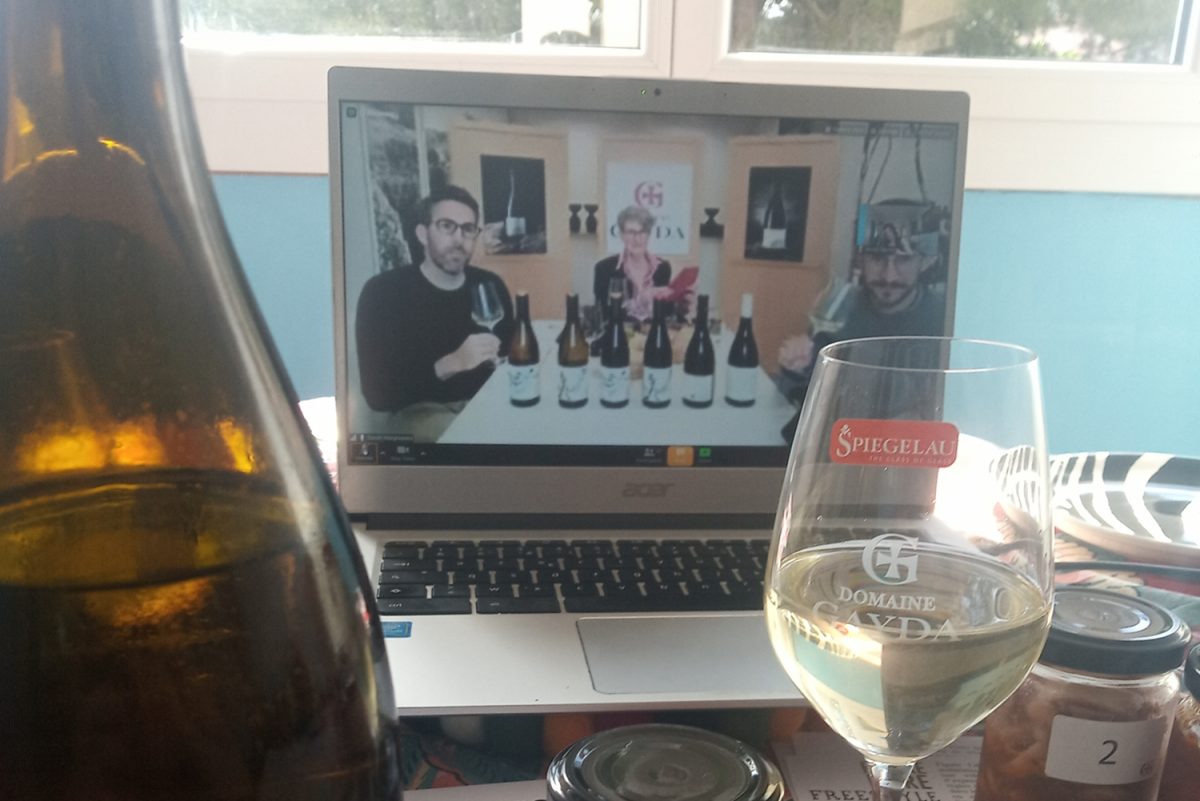
Vegetable pairings with Domaine Gayda wines
Pastis, Montpellier’s new Michelin-starred restaurant, and Domaine de Brugairolles have combined their talents for an exceptional tasting. The chef tasted the wines and imagined the dishes. An all-round success for high-flying chords.
Daniel Lutrand and Jean-Philippe Vivant, co-managers and respectively chef and sommelier of Le Pastis in Montpellier, took up the challenge set by Tim Ford, Managing Director of Domaine Gayda, represented by Vincent Chansault, Technical Director, and David Chardron, Sales Director.
Figure Libre Chenin Blanc 2019: bridging the gap with kohlrabi through apples
We start in the green: like Vincent Chansault and David Chardron, the chenin came to Domaine Gayda from the Loire. It is available as a still or sparkling wine, dry, semi-dry or sweet. At Brugairolles, we want it to be chiselled and airy, harvested at just the right ripeness, except for 10% of the crop, which is left to over-ripen and wait for botrytis. It lends the wine its full-bodied mouthfeel and aromatic complexity.
“When we tasted it,” sums up Jean-Philippe Vivant, “we wanted to associate green with it on the plate and bridge the gap to apple, its signature aroma, with a spring timbale of kohlrabi, peas, snow peas and asparagus.”
It’s a change from sauvignon with its beautiful greens!
Figure Freestyle Blanc 2019: peace with the artichoke for a handful of herbs
Octopus, chorizo, a land-sea alliance with an Atlantic twist between Galicia and Portugal. Let’s lay them on a bed of artichoke cream. The deal gets tougher. But let’s add green anise, fennel and tarragon. The alchemy happens. Freestyle Blanc is a blend of Grenache Blanc and Macabeu grapes harvested between Fenouillèdes and Roussillon and brought to Brugairolles in refrigerated trucks. The boldness and oxidative touch of these racy varietals meet the aniseed accents of the dish. The glass and the verrine are in perfect harmony, both in terms of aroma and texture. A success story.
Figure Libre Cabernet Franc 2019: all the aromas of free carmenet
The Carmenet family includes varietals such as Cabernet, Merlot and Carménère. What they have in common is a propensity to develop pyrazine (bell pepper) aromas, particularly when under-ripe (but not only), and an earthy, fresh champignon character on certain terroirs.
The Cabernet Franc (another Loire variety!) does not express itself at Brugairolles as it does at Saumur-Champigny. Spicy (but very ripe!) with green pepper and terracotta-like earthiness (not at all jammy!) on a glorious, very red bed of strawberry, wild strawberry and raspberry, a delight.
For the wine pairing, the red was on! “It wasn’t complicated”, relativizes the too modest Daniel Lutrand, “Just from the poster, we wanted bell pepper and in the glass we saw strawberry!”. Grilled bell pepper, strawberry and pepper: in this pairing, glass and verrine smile and wink at each other from both sides of the mirror. A delicious face-off!
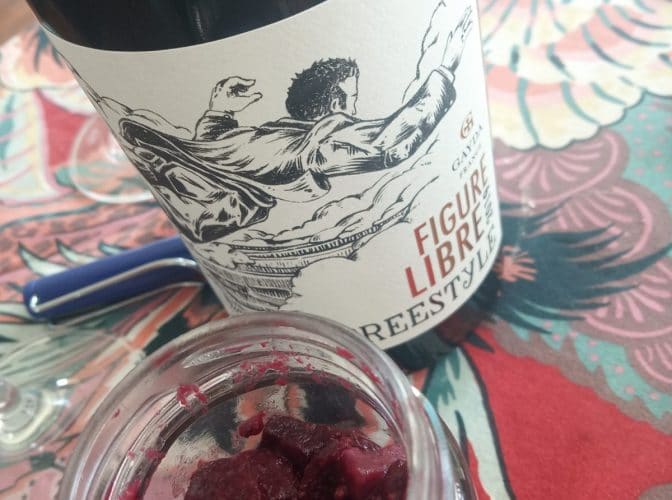
Figure Libre Freestyle Rouge 2019: a bridge from land to land with beet
After the earthy aromas of Cabernet Franc comes a blend of Syrah (50%), Grenache (30%), Mourvèdre (10%) and Carignan (10%). The grapes come from Villa Mon Rêve, owned by the Gayda estates in La Livinière, and from parcels monitored by the estate in Saint-Paul de Fenouillet and Lesquerde.
Two of the greatest Syrah terroirs in Languedoc and Roussillon are represented: La Livinière and Lesquerde. The wine is sumptuous, opulent, generous on the attack with pepper and black berries, fresh and lively on the finish that slams like a whiplash. Between the two, the mid-palate blossomed with voluptuous red fruit and tannic corners rounded off by a short ageing period in multi-wine barrels. No untimely woodiness, but a jagged structure and a salivating, saline, mineral finish. After the earthy aroma of the Cabernet, the minerality of the blend is expressed here in the mouthfeel.
“To reinforce this perception of minerality, we stayed below ground,” explains Jean-Philippe Vivant: “If I say red and earthy…” The answer is beetroot. The answer is beet; the chef has delicately smoked it, enriched it with root umami and liquorice juice. The result is perhaps the most magical pairing of this incredible tasting experience. The verrine is as breathtaking as the glass.
Chemin de Moscou 2018: sweet burnt onions for well-bred syrah
Cream of burnt sweet onion, kasha (buckwheat) and black garlic, are you worried about the poster? However, this trio opens up a brown-black aromatic universe that blends delightfully well with Domaine Gayda’s flagship cuvée, where Brugairolles syrah holds the blend (68%), mixed with grenache (28%) and a touch of cinsault (4%). The ageing process (21 months in barrel) and the selection of the best batches for the final blend can be seen in the velvety, tightly woven tannic structure, while the aromas invite you into a world of expressive, generous tawny black fruit, brown spices between nutmeg and cinnamon, black pepper and blue violet floral notes. The dish brings to this picture the sweetness of black garlic and the mellowness of sweet onion cream, while the spices and tannins of the wine seem to coat the buckwheat grains with delicate toasted flavors.
Villa Mon Rêve 2016: where syrah waltzes with mustard
Finally, off to La Livinière with Villa Mon Rêve, 90% Syrah with 10% Grenache in AOP Minervois-La Livinière. The wine is aged for 20 months in 2000-litre tuns without racking. We had to open it the day before to aerate it and allow it to reveal its bouquet of iris, violets and thyme blossom, a touch of smoked meat that’s very appetizing and calls for the only verrine where the beef makes a place for itself, with peas and in a mustard jelly. Once again, it’s scary, yet the spiciness of the mustard meets the tonicity of an elegant, fine and lively Syrah, and it’s another success!
Many thanks to David Chardron (left in photo) Vincent Chansault (right) of Domaine Gayda, to Sarah Hargreaves (center) their press attaché and of course to Daniel Lutrand and Jean-Philippe Vivant.